When it comes to insulating a Florida home or commercial property, spray foam insulation has become one of the most effective and popular options. But before choosing this type of insulation, it’s important to understand the two main types: open cell and closed cell. While both provide excellent benefits, they perform very differently, especially in Florida’s hot, humid, and hurricane-prone climate.
Below, we’ll break down the differences between the two spray foam types and explain which may be better for Florida homeowners and businesses.
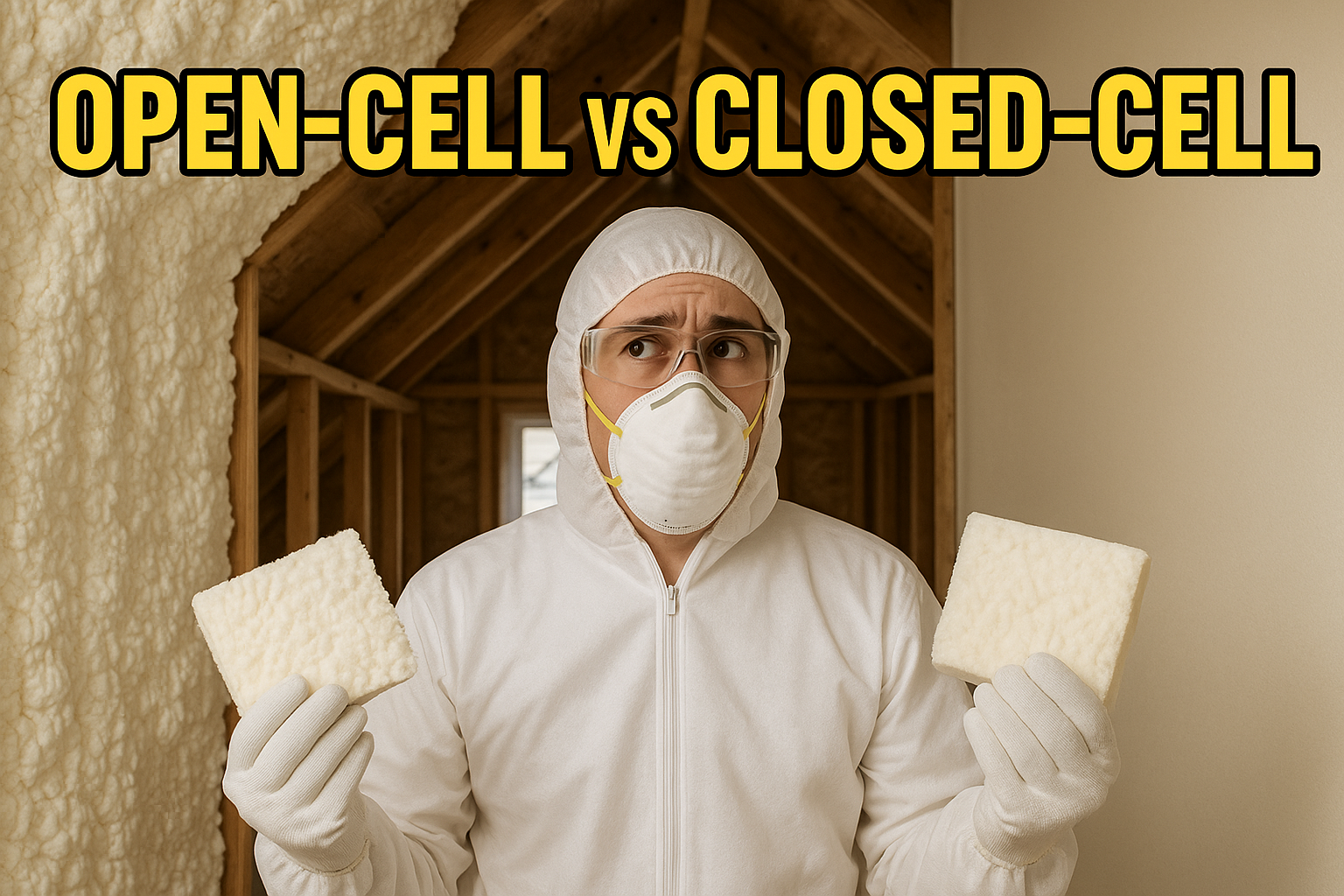
Open Cell Spray Foam in Florida
Open cell spray foam is known for its lightweight structure and affordability. It expands dramatically when installed, allowing it to seal cracks, gaps, and hard-to-reach areas effectively.
Key Characteristics of Open Cell Spray Foam
R-value: ~3.6 per inch (lower insulation power compared to closed cell)
Foam Density: 0.5 lb per cubic foot (lightweight)
Water Resistance: Not water impermeable – water can pass through if leaks occur
Structural Strength: Does not add reinforcement to walls, attics, or roof decks
Pros of Open Cell in Florida
Lower Cost: More budget-friendly than closed cell, making it popular for large projects.
Sound Dampening: Excellent for reducing noise transmission, which is useful for homes in busy Florida cities or near highways.
Air Sealing: Great at filling gaps and preventing air leaks, improving indoor comfort and reducing cooling costs.
Cons of Open Cell in Florida
Not Water-Resistant: In Florida’s storm-prone environment, roof leaks can let water pass through, which can lead to mold or rot.
Lower R-Value: May not be enough insulation power for attics or exterior walls without thick applications.
No Added Strength: Does not reinforce roof decking, which is a concern in hurricane-prone regions like Miami, Tampa, and Orlando.
 Best Use in Florida: Interior walls for soundproofing, large open spaces where cost is a concern, or areas without risk of water intrusion.
Closed Cell Spray Foam in Florida
Closed cell spray foam is denser, stronger, and more water-resistant, making it an excellent option for Florida homes where durability and moisture protection are top priorities.
Key Characteristics of Closed Cell Spray Foam
R-value: ~6.5 per inch (almost double the insulation power of open cell)
Foam Density: 2 lb per cubic foot (much denser and stronger)
Water Resistance: Water impermeable – acts as a moisture and vapor barrier
Structural Strength: Adds reinforcement to roof decks, ceilings, and walls
Pros of Closed Cell in Florida
Superior Insulation: Keeps Florida homes cooler in the scorching summer heat, reducing energy bills.
Moisture Protection: Creates a vapor barrier, crucial in Florida’s humid climate.
Structural Reinforcement: Strengthens roof decks and walls, which is a major advantage during hurricane season.
Durability: Longer lifespan and better performance in extreme weather.
Cons of Closed Cell in Florida
Higher Cost: More expensive upfront, but long-term savings in energy efficiency and home protection often offset the investment.
Less Expansion: Doesn’t expand as much as open cell, so more material may be required to fill certain spaces.
Best Use in Florida: Roof decks, exterior walls, crawl spaces, and anywhere moisture control and structural reinforcement are critical.
Quick Comparison: Open Cell vs. Closed Cell Spray Foam in Florida
| Feature | Open Cell Spray Foam | Closed Cell Spray Foam |
|---|---|---|
| R-Value (per inch) | ~3.6 | ~6.5 |
| Density | 0.5 lb/ft³ | 2 lb/ft³ |
| Water Resistance |  No No | Yes |
| Structural Strength | No | Yes |
| Cost | Lower | Higher |
| Best For | Interior walls, soundproofing, budget-friendly projects | Roof decks, exterior walls, hurricane protection, moisture control |
Which Spray Foam is Best for Florida Homes?
If you’re building or upgrading a home in Florida, your choice often depends on budget, location, and goals.
Choose Open Cell if you’re looking for a cost-effective option for interior applications and soundproofing. It’s great for families who want comfort and noise reduction without the higher price tag.
Choose Closed Cell if you want maximum energy efficiency, moisture protection, and hurricane resilience. While more expensive upfront, it’s often the smarter long-term investment for Florida homeowners.
Given Florida’s humid climate, frequent storms, and high cooling costs, closed cell spray foam is generally the recommended option, especially for attics and roof decks where protection and strength matter most. Be sure to discuss the pros and cons of both options with your contractor to ensure you choose the insulation that best fits your home’s needs.