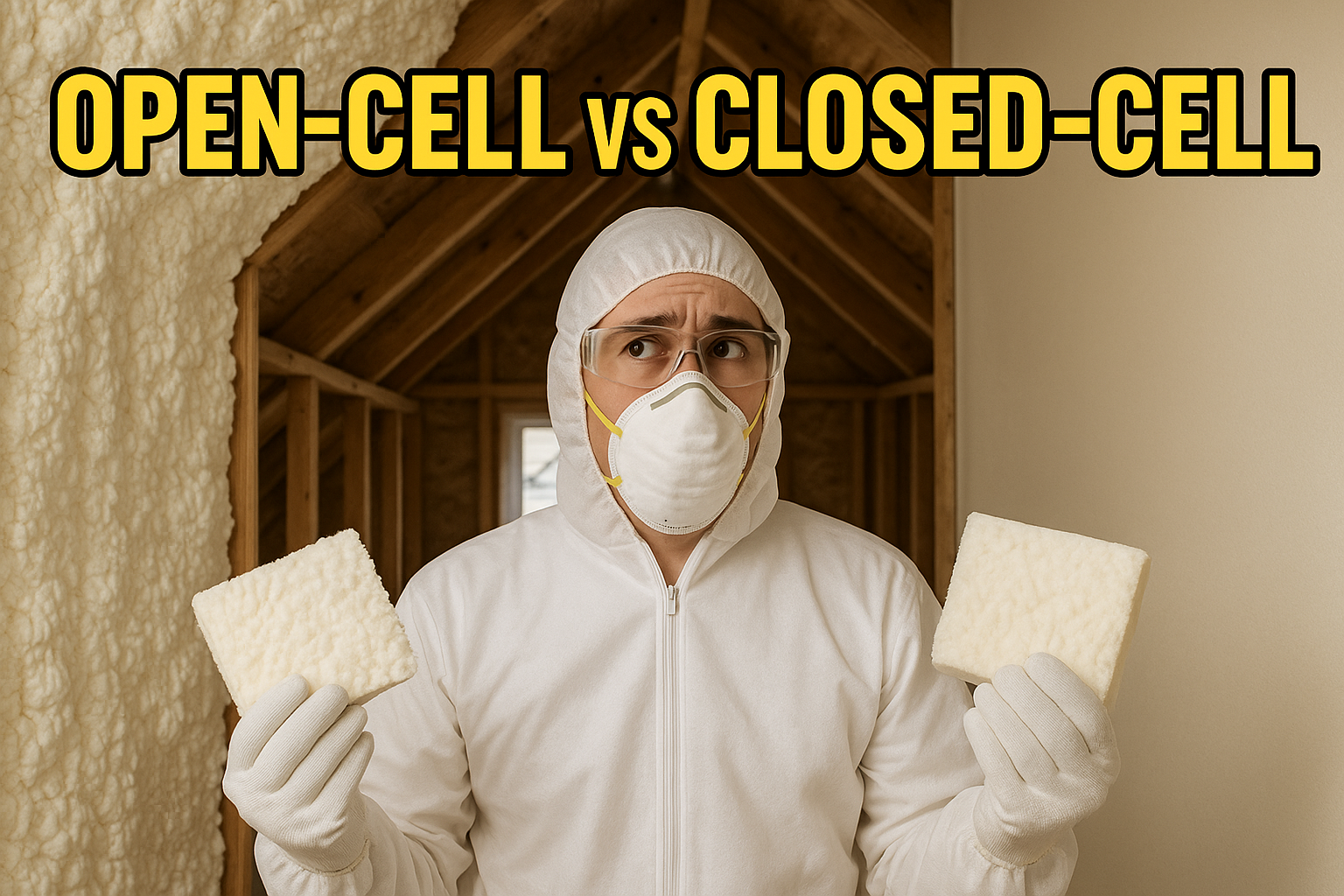
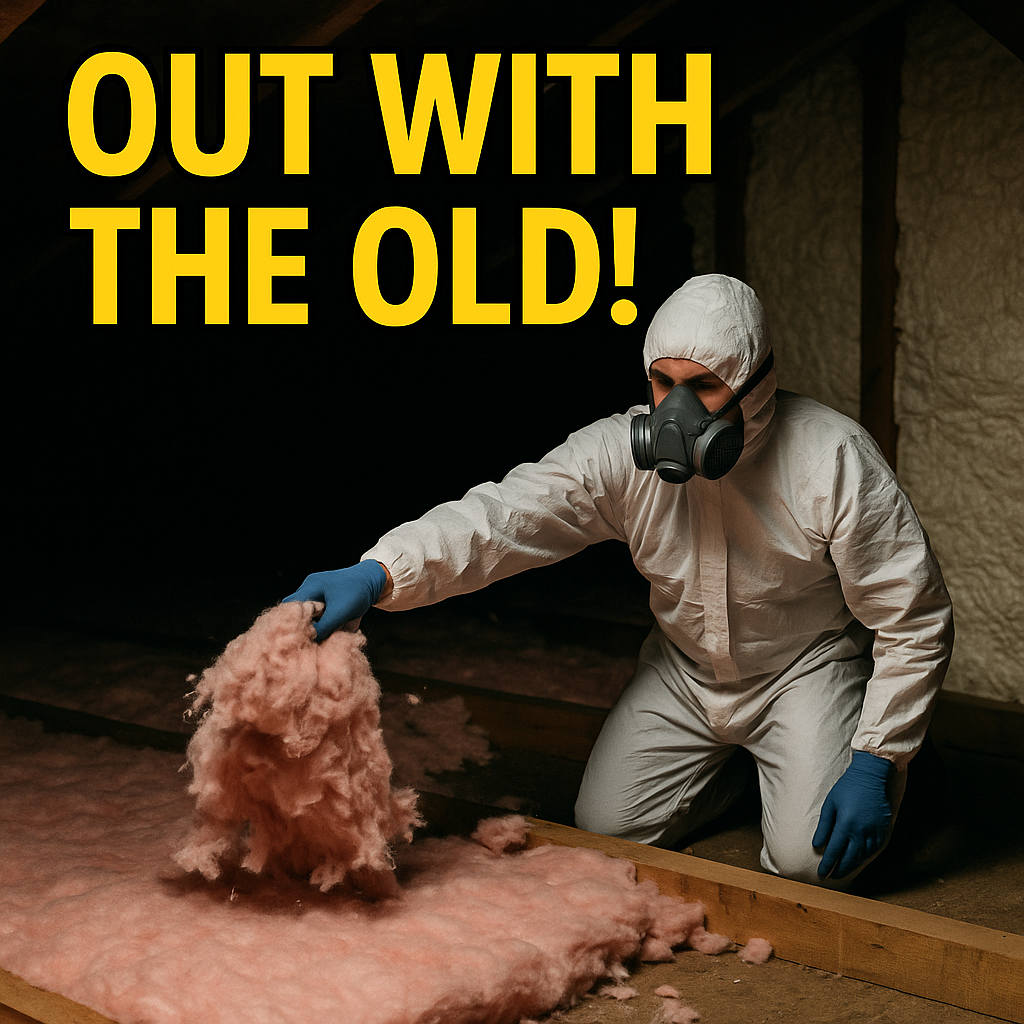
When considering spray foam insulation, one of the most common homeowner questions is whether the existing fiberglass batts or blown-in insulation must be removed first. The answer is most always yes however there are a few exceptions to this.
Why Old Insulation Interferes with Spray Foam Performance
Many homeowners assume that leaving the old fiberglass or cellulose on the attic floor will “add extra insulation.” In reality, this leftover material causes more problems than it solves. Old insulation hinders airflow, restricts circulation, and can even create the perfect conditions for moisture buildup and mold growth.
Air circulation is critical for keeping your home comfortable and efficient. Think of it like a lava lamp: warm air rises, cools, and falls back down again in a constant cycle. If that cycle is blocked by outdated insulation, your furnace and air conditioner have to work harder to move air through the house. Over time, this can shorten the lifespan of your HVAC system and increase your energy bills.
The Role of Circulation in a Conditioned Attic
When the roof deck is insulated with spray foam, your attic becomes a conditioned space. Air should move freely into the attic, cool against the roof, and circulate back down. If old insulation is left on the floor, it prevents that air from moving as intended. This not only reduces efficiency but also increases the risk of condensation forming in the attic — especially when there’s a large temperature difference between the attic and the living space.
Fiberglass and cellulose are notorious for trapping moisture. Once damp, they become a breeding ground for mold, which can then circulate throughout the home via your HVAC system. That’s why removing insulation before adding spray foam is so important for maintaining clean, healthy indoor air.
Other Reasons to Remove Old Insulation
Temperature Control – Prevents hot or cold spots between the attic and living space.
Condensation Prevention – Reduces the risk of moisture damage and mold.
Cleaner Home Environment – Old insulation often contains dirt, dust, and outside air contaminants.
System Efficiency – Allows your HVAC system to run more effectively with less strain.
Steps to Convert from Fiberglass or Blown-In to Spray Foam
Inspection – Check for pests, water damage, and ventilation issues.
Removal – Safely bag and dispose of the old insulation before adding spray foam.
Air Sealing – Seal penetrations around pipes, vents, and wiring.
Application – Spray foam is applied directly to the roof deck, creating a continuous barrier.
Finishing – Ensure proper curing and ventilation for long-term performance.
What If You Insulate the Attic Floor Instead?
In rare cases, insulating the attic floor with spray foam makes sense. However, the old insulation must still be removed first. Foam cannot properly bond or create an air seal if it’s sprayed over fiberglass or cellulose. Floor applications also require careful attention to ventilation and condensation management, making roof-deck insulation the preferred option for most homes.
Final Takeaway
While it might feel like an extra step, removing existing insulation before adding spray foam almost always delivers the best results. It improves circulation, reduces the risk of moisture damage, and ensures your spray foam insulation works at peak efficiency.
If you’re planning an upgrade, make sure your contractor addresses old insulation removal first — it’s the key to unlocking the full benefits of spray foam.